Tag Archive

Payment infrastructure pakistan

1 article tagged with this topic.

Top 5 Pakistan Payment Rails

Top 5 Pakistan Payment Rails

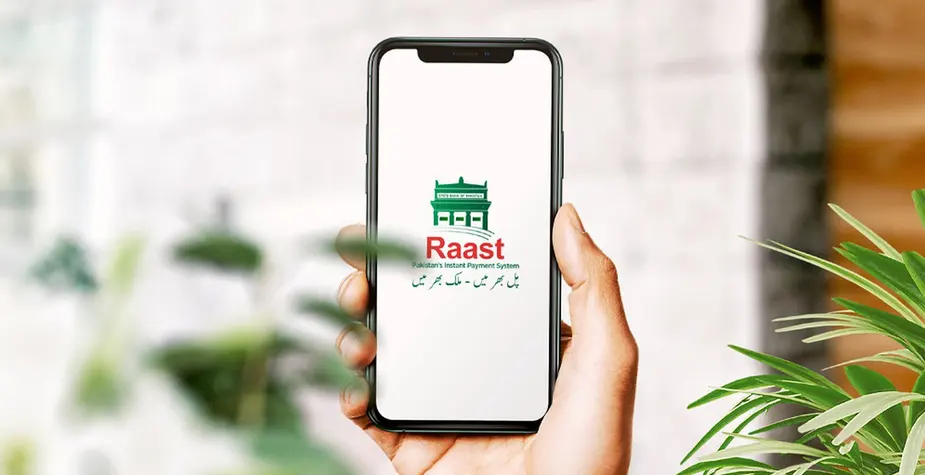
Pakistan now runs on a mix of domestic payment rails, card networks, and legacy switching infrastructure. If you want to understand how money actually moves across retail banking, cards, wallets, and transfers, these are the names that matter most. This guide compares five retail payment rails and payment networks Pakistanis often hear about:Raast 1LINK PayPak MNET Switch Visa / MastercardDate check: product pages were reviewed on March 18, 2026. Payment capabilities, bank integrations, and merchant support can change, so verify current coverage directly from the relevant official source. Why this comparison matters for FIRE Retail payments look like plumbing, but the plumbing affects cost, convenience, and reliability. If your money movement is slow, expensive, or dependent on the wrong rails, your day-to-day financial system becomes weaker. Use this as a consumer map, not a technology essayFocus on what the rail actually enables for a retail user. Separate instant account transfers from card-network acceptance. Ignore marketing labels and look at reach, cost, and actual use cases.The 4 things to check before relying on a railWhether the rail is domestic, international, or legacy. Whether your bank, wallet, or merchant actually supports it. Whether it improves cost, speed, or acceptance in your real usage. Whether it is designed for transfers, ATM access, card payments, or all three.Quick answer If you want the most important domestic retail rail today, start with Raast for real-time account-to-account transfers. If you want the backbone behind ATM interoperability, bill payments, and a lot of interbank routing, 1LINK matters most. PayPak is relevant if you care about a domestic card scheme, while Visa / Mastercard still dominate international acceptance and cross-border card usage. MNET Switch is mostly a legacy reference now rather than the main growth story. 1) Raast SBP positions Raast as Pakistan’s first instant payment system, designed to enable end-to-end digital payments among individuals, businesses, and government entities. Its biggest retail advantage is instant account-to-account transfer capability using IBAN or a Raast ID, instead of depending on older batch-style banking processes. Raast is the best fit for users who want fast domestic bank transfers and for banks or wallets building around real-time account-based payments rather than card rails. Raast is only as useful as the app or bank layer sitting on top of it. Some institutions support more features than others, so verify whether your provider supports the exact transfer, alias, or merchant flow you want. 2) 1LINK 1LINK describes itself as Pakistan’s first fully licensed PSO/PSP and the country’s largest payment and switch system. Its role is broader than a consumer app: it sits underneath shared ATM access, interbank funds transfer, bill payments, and several other payment services used by banks and institutions. 1LINK matters most for consumers who rely on ATM interoperability, bank-to-bank routing, and bill-payment infrastructure working across multiple financial institutions. Retail users do not usually choose 1LINK directly. They experience it through their bank or wallet, so service quality, downtime handling, and user interface still depend heavily on the front-end provider. 3) PayPak PayPak is Pakistan’s domestic payment scheme and is owned and operated by 1LINK under the aegis of SBP. The practical appeal is local card-scheme economics and domestic control, which matters for financial inclusion, local card issuance, and reducing dependence on international-only schemes for some retail use cases. PayPak is a sensible fit for local debit-card usage where domestic acceptance matters more than international travel or global online checkout compatibility. Domestic card schemes do not automatically offer the same international acceptance as Visa or Mastercard. If you shop cross-border, travel frequently, or rely on international websites, verify whether your card is domestic-only or co-badged. 4) MNET Switch MNET was an important early switch in Pakistan’s ATM and card-interoperability history. SBP’s payment-system history notes that MNET was established by MCB in 2001, and MCB’s later annual-report disclosures reflect that MNET Services was merged into MCB in 2019. That means MNET matters more as a legacy milestone than as the central retail rail story today. MNET is mainly relevant for readers trying to understand how Pakistan’s retail payments evolved before today’s stronger focus on Raast, 1LINK, and broader digital-payment partnerships. Do not treat MNET like a current standalone consumer decision in the same way as Raast or PayPak. For present-day retail use, it is more historical context than a direct selection point. 5) Visa / Mastercard Visa and Mastercard are global card networks rather than domestic instant-payment rails. In Pakistan, they still matter because they expand international acceptance, card standards, online checkout reach, and issuer partnerships. Mastercard’s Pakistan-facing material emphasizes acceptance and digital ecosystem growth, while Visa’s payments-ecosystem work highlights broader resilience and inclusion. Visa / Mastercard are the right fit for users who care about international card acceptance, travel, online payments, or banks issuing globally recognized credentials. These schemes solve a different problem than Raast. They are not substitutes for instant bank-to-bank transfers, and their retail economics depend on the issuing bank’s charges, FX pricing, card type, and merchant acceptance. How to choose your option in 10 minutes Step 1: Decide what problem you are solvingIf the problem is instant domestic transfers, start with Raast. If the problem is ATM and interbank connectivity, understand 1LINK. If the problem is local card issuance, look at PayPak. If the problem is international acceptance, look at Visa / Mastercard.Step 2: Check your actual front-end providerConfirm whether your bank or wallet supports the rail well. Check whether the merchant or app you use actually accepts that rail.Step 3: Do not confuse categoriesAccount-to-account rails and card networks are not the same thing. Legacy switch history is useful context, but it is not always the best indicator of current consumer relevance.FIRE Rule for Payment Decisions Use the simplest rail that lowers friction and cost for your actual use case. The best payment setup is not the one with the most logos. It is the one that moves your money cheaply, reliably, and with the least operational hassle. Comparison Table (Quick View)Option Core proposition Best user profile Cost/value angle Main cautionRaast Instant domestic account-based payments Users prioritizing fast local transfers Strong convenience and domestic utility Feature coverage still depends on bank or wallet integration1LINK Shared banking rails for ATM, IBFT, bills, and switching Bank customers relying on interbank infrastructure Valuable because of reach and interoperability End-user experience depends on the front-end institutionPayPak Domestic card scheme for local card issuance and usage Users focused on local card acceptance Supports local scheme development International use is narrower than Visa / MastercardMNET Switch Legacy switch that shaped early interoperability Readers studying payment-system evolution Historical context more than current selection value Not the main standalone retail rail story todayVisa / Mastercard Global card-network acceptance and cross-border usage Travelers and online card users Strong when international acceptance matters Not a replacement for instant local transfer railsOfficial Product PagesRaast - SBP Raast - Digital Financial Services, SBP 1LINK 1LINK Shared ATM PayPak MCB Annual Reports Mastercard on Digital Payments in Pakistan Visa on Building Resilient Digital Payment EcosystemsImage Credit Feature image source: Chakor Ventures.

Read article