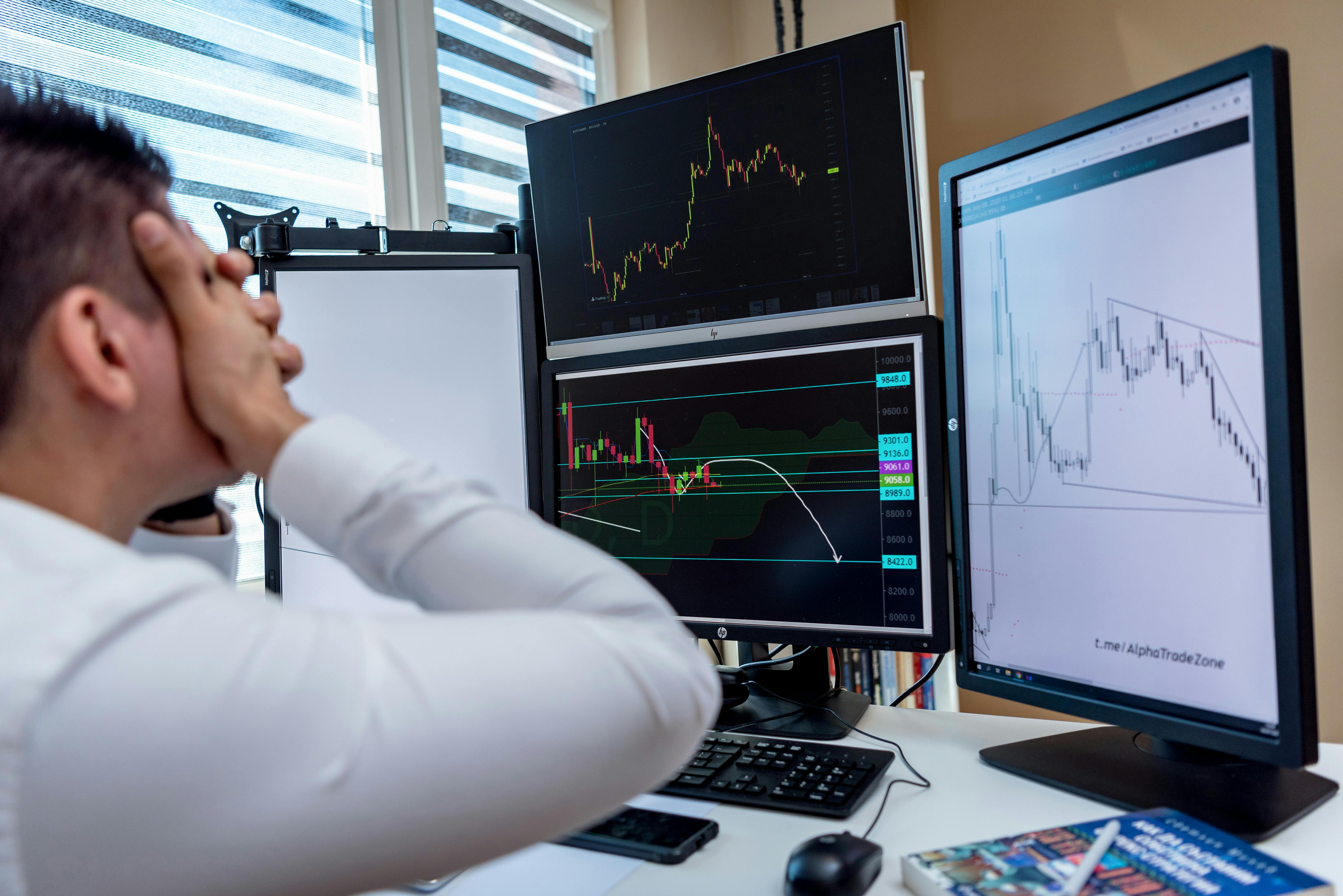
Latest Research: Why Investors Drift Short-Term

TLDR
The latest research points in one direction: retail investors usually research right before they trade, lean too hard on short-term signals, and get even more short-term when social media is their main input. The practical mindset response is not to consume more finance content. It is to build a calmer information process with a longer decision horizon.
One of the biggest investing mistakes is not ignorance. It is attention fragmentation. Most losses do not come from reading nothing. They come from consuming too much noise too close to the trade, with too little focus on what actually matters over time.
Recent research is backing this up with harder data. For mindset work, this matters because attention sits upstream of nearly every behavioral mistake. When urgency, novelty, and social proof capture your focus, your process usually follows.
If you are new to the basics, start with Getting Started with Investing in Pakistan and the pre-investing checklist before acting on any market idea.
What recent research is saying
In a March 2025 NBER working paper, Toomas Laarits and Jeffrey Wurgler analyzed browser data from a roughly representative sample of individual investors. Their central finding is uncomfortable but useful: the typical investor spends very little time researching a trade, and that research usually happens right before the trade itself. The same paper also finds that investors who focus more on short-term information are more likely to trade speculative stocks.
That matters because last-minute research often feels like diligence without actually improving judgment. When your research window is short and emotionally charged, you are less likely to compare alternatives, think in probabilities, or slow yourself down.
Then in November 2025, Hohyun Kim published a paper in Finance Research Letters showing that using social media for investment information is associated with greater short-termism among retail investors. The effect was stronger among younger and overconfident investors. That does not mean every finance account or online discussion is useless. It means the medium itself can push investors toward shorter holding periods, more urgency, and more reactive behavior.
The newest angle comes from a 2026 paper in the Journal of Financial Literacy and Wellbeing. Marc Hofstetter and José Nicolás Rosas studied nearly a quarter of a million investors in two collapsed Colombian Ponzi schemes. Education and household resources were associated with better outcomes, but the broader result is sobering: even the more educated groups still suffered losses on average, and the majority of participants lost money. In plain English, being relatively smarter than the crowd is not the same as being protected from a speculative environment.
The mindset lesson behind all three papers
These studies point to the same behavioral problem from different angles:
- Investors often act with too little time between stimulus and decision.
- Short-term information pulls attention toward speculative behavior.
- Social proof and bubble logic can still overwhelm people who are not completely uninformed.
This is why compounding in Pakistan is mostly a behavior problem, not just a return problem. Time only helps when your process keeps you invested long enough.
Why this matters for Pakistan-based investors
Pakistan-based investors are not isolated from these patterns. In some ways, the local environment can make them worse.
Inflation anxiety, currency stress, low trust, tip culture, and WhatsApp-style distribution of market opinions all create conditions where short-term narratives feel unusually persuasive. When the environment already feels unstable, investors become more vulnerable to stories that promise speed, certainty, and escape.
That can show up in several ways:
- Chasing whatever asset or theme is suddenly popular.
- Confusing screenshots and social proof with evidence.
- Treating every policy move or market headline like a call to action.
- Researching only when excitement is already high.
The mindset risk is not simply bad analysis. It is compressed decision time.
Four practical rules from the research
1. Separate research time from execution time
If you only start reading when you are already about to buy, you are not really researching. You are mostly seeking emotional confirmation. I would separate idea review from execution by at least one sleep cycle for any non-routine decision.
2. Build a default long-term filter
Before acting on any idea, I would ask one question: “Will this still matter to me in three years?” If the answer is unclear, the idea is probably too driven by current noise.
This is especially useful if you keep getting pulled into whatever is trending this week.
3. Treat social media as signal discovery, not decision authority
Social media can alert you that a topic exists. It should not be the place where conviction gets finalized. I would use it to notice themes, not to complete the investment decision.
If an idea cannot survive an offline review, it is not ready.
4. Assume speculative environments can overpower smart people too
The 2026 bubble-burst research is a useful warning against intellectual overconfidence. Many investors think the real risk applies only to the uninformed. In practice, speculative environments also trap people who believe they are entering “carefully” or “early.”
Your protection is not feeling smarter than others. Your protection is having rules that stop you from joining the wrong game.
A simple attention policy for ordinary investors
You do not need a complex system. You need a repeatable one.
| Situation | Default response |
|---|---|
| You see a new idea on social media | Save it, do not act on it immediately |
| You feel urgency to buy now | Wait one full day and review the thesis offline |
| You have checked prices repeatedly this week | Stop checking and return to your written allocation plan |
| A story promises fast gains with low risk | Move to verification mode, not action mode |
This looks boring, which is exactly the point. Good mindset systems reduce the chance that attention gets hijacked by speed.
A better definition of being informed
Many investors think being informed means staying constantly updated. That is often false. Constant updating can lower signal quality if it keeps resetting your time horizon.
A better definition is:
- You know what you own.
- You know why you own it.
- You know what would justify a change.
- You are not relying on excitement to maintain engagement.
That kind of clarity is much more valuable than a constant stream of new opinions.
FIRE Rule for Attention
If your attention behaves short-term, your portfolio usually will too. The edge is not consuming more market content. The edge is protecting enough mental distance to think in years instead of reacting in hours.
Related Compound PK guides
- Getting Started with Investing in Pakistan: A Beginner Guide
- Before You Invest in Pakistan: A Long-Term Investor’s Checklist
- Compounding in Pakistan: Why Long-Term Investing Still Wins
Further reading
- The Research Behavior of Individual Investors | NBER, March 2025
- Social media engagement and retail investors’ short-termism | Finance Research Letters, November 2025
- Lessons from a bubble burst | Journal of Financial Literacy and Wellbeing, 2026
- Build Wealth Over Time Through Saving and Investing | Investor.gov
Image Credit
Feature image source: AlphaTradeZone.